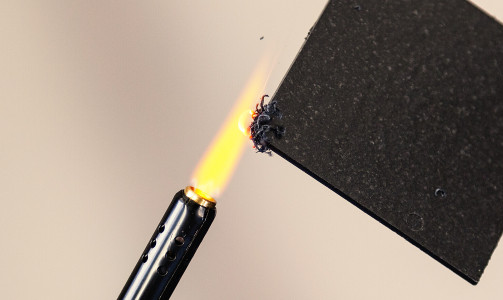
High-Temperature Expandable Graphite for Engineering Polymers
High Temperature Expandable Graphite from LUH is able to be used in thermoplastics without expanding during the extrusion process.
 Continue Reading...

 3 Minute Read
 By Ian Brown

Aside from the aesthetic reasons for applying a coating to an asset, the primary objective is likely to be protection of that asset from the effects of the environment in which it is situated, particularly against the effects of corrosion caused by rain, humidity and water immersion etc. However, the process of corrosion takes place over a long period of time. Therefore, the technology employed to prevent or minimize corrosion also needs to have significant longevity and not lose its efficacy. This can be achieved to some degree by the use of platy fillers such as mica or micaceous iron oxide or glass bubbles which hinder the ingress of water from the outside to the substrate. More often though some form of corrosion inhibitor is required to impart the necessary protection.

Figure 1: Utilising a good anti-corrosion coating can increase the life of both the coating and the asset.
Historically, inorganic inhibitors such as zinc phosphate, modified zinc phosphates and other mixed metal phosphates have been the conventional choice of inhibitors. For extremely demanding markets such as aerospace and defence, chromate-based inhibitors have been the “go-to” first choice but regulatory forces and safety concerns now require coatings formulators to find other solutions.
These chemistries have served the coatings industry well but with some compromises, for example,
The Asconium® range of corrosion inhibitors from ASCOTEC have been designed to overcome or at least to reduce some of the above-mentioned compromises. These liquid additives are multi-component blends that function through a combination of mechanisms but mainly,
With these mechanisms working simultaneously and synergistically, excellent corrosion protection properties can be imparted to the coating.
The hydrophobic nature of the Asconium® inhibitors is particularly important as this contrasts greatly with inorganic inhibitors which depend on a controlled level of water solubility in order to function which can also be their Achilles heel in terms of increasing the water sensitivity of the film and vulnerability to blistering etc.
Therefore, to summarise, Asconium® inhibitors offer the coatings chemist the following benefits,

Figure 2: A good corrosion inhibitor should provide long-term corrosion protection at low dosage and be easy to incorporate. Asconium® offers this plus more to coatings formulators.
The Asconium® allows for the formulation of both solvent-borne and water-borne direct-to-metal coatings so do not limit resin selection. In addition, two-pack polyurethane and epoxy coatings are easily achievable.
While Asconium® can overcome many of the compromises that were required when formulating with conventional inorganic inhibitors, there are still formulation considerations. For example, if you are removing an inorganic inhibitor from a formulation and replacing it with an Asconium® liquid inhibitor, it is important you balance the pigment volume concentration with more filler.
In water-based systems, there are essentially two recommended ways of introducing Asconium® inhibitors in terms of the order of addition and this advice is available upon request. Also, the performance of a waterborne direct-to-metal coating may be further enhanced by the use of a non-ionic pigment dispersant (such as Edaplan 490 from Munzing Chemie) along with an inherently hydrophobic flash rust inhibitor from the ASCOTEC Ascotran® range.
If you are developing a coating to be applied at a dry film thickness of less than 15 microns then depending on the performance requirements, you may need to consider a synergistic blend of Asconium® inhibitor with a conventional inhibitor for the best results.
This article is really an introduction to the Asconium® concept and the potential benefits for you as a formulator and deliberately does not drill down into specific Asconium® products and their suitability. Since every project has its own requirements, it is recommended you contact us to discuss the specifics of your formulation and requirements to get the right match.

Ian has a technical background in Chemistry and Materials Science, having studied at the University of Greenwich and then having worked in a technical capacity for both the MOD and Synthomer. Since then he has held various sales positions and is now one of the longest-serving members of our Technical Sales Team specialising in the Coatings, Adhesives and Graphic Arts sectors.
 View All Articles By Ian Brown
 5 Minute Read
 5 Minute Read
 2 Minute Read
VIEW ALL ARTICLES
2 Minute Read
VIEW ALL ARTICLES
High Temperature Expandable Graphite from LUH is able to be used in thermoplastics without expanding during the extrusion process.
Continue Reading...
 5 Minute Read
Micaceous Iron Oxide (MIO) is a naturally occurring iron oxide used in protective coatings due to a lamellar/platy morphology that allows it to form a barrier towards the ingress of water.
Continue Reading...
 5 Minute Read
Thermochromic pigments, such as Chromazone®, enable formulators to create products with dynamic and heat-sensitive, colour changes. These smart materials have found their way into various applications, from functional safety indicators to eye-catching promotional products. For example, reversible thermochromic pigments are used in novelty mugs that reveal hidden designs when filled with hot beverages, packaging that signals when food or drink is at the optimal temperature for consumption, security labels for brand protection and anti-counterfeiting, and temperature-sensitive warning indicators on surfaces or medical devices.
Continue Reading...