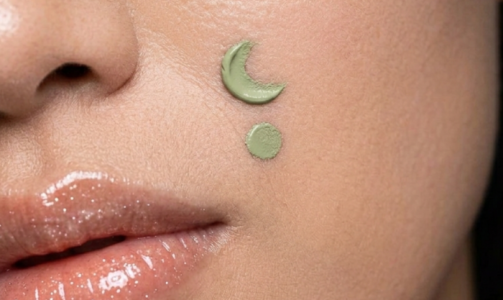
Thermochromic pigments are heat-sensitive colourants that change colour, or lose colour, at a defined activation temperature — reversibly in products like Chromazone®, or permanently in products like Kromagen®. Formulators use them to build products with dynamic, temperature-responsive colour changes (Figure 1), from functional safety indicators to eye-catching promotional products.
For example, reversible thermochromic pigments are used in novelty mugs that reveal hidden designs when filled with hot beverages, packaging that signals when food or drink is at the optimal temperature for consumption, security labels for brand protection and anti-counterfeiting, and temperature-sensitive warning indicators on surfaces or medical devices.

Figure 1. Thermochromic pigments such as Chromazone® can be used in a variety of applications from novelty promotional products, through to safety indicators or brand protection applications.
How do thermochromic pigments work?
Thermochromism in Chromazone® pigments is based on microencapsulated leuco dyes that undergo a reversible structural change when exposed to specific temperatures. Below their activation temperature, these dyes are in a coloured state; upon heating, the solid matrix they are suspended in melts, and the molecular structure shifts, rendering the pigment colourless or lighter. This transition is fully reversible: cooling restores the original colour. The activation temperature can be tailored between -10°C and 69°C to suit specific application needs, with the colour change typically occurring within a 3–5°C window around the rated temperature.

Figure 2: Principle of reversible thermochromism. When heated about their activation temperature, Chromazone® thermochromic pigments will undergo a colour change and change from coloured to colourless.
At a chemical level, this "leuco dye" effect is actually a three-component system rather than the dye acting alone. Each microcapsule contains a colour former (the leuco dye itself), a colour developer (typically a weak acid such as bisphenol A or a phenolic compound, which controls the dye's protonation state), and a co-solvent or melt material. Below the activation temperature, the co-solvent is solid and holds the dye and developer in close, associated contact, producing the coloured state; once the co-solvent melts, the dye-developer complex dissociates and the pigment turns colourless or lighter. This is also why the mixing guidance below matters: the microcapsule shell is commonly a melamine-formaldehyde or urea-formaldehyde resin formed by in-situ/interfacial polymerisation around the dye-developer-solvent core, and high-shear mixing can rupture that shell and permanently disable the colour-change function rather than just reducing performance.
Leuco dye vs liquid crystal thermochromism: what's the difference?
Chromazone® and Kromagen® are leuco dye systems, but leuco dye chemistry is not the only route to a temperature-responsive colour change — liquid crystal (LC) thermochromism is the other major technology, and formulators sometimes ask which is the better fit. The two work on fundamentally different principles and are not interchangeable:
Table 1: Difference between leuco dyes and liquid crystals
| Feature |
Leuco dye (Chromazone®/Kromagen®) |
Liquid crystal |
| Mechanism |
Chemical — reversible molecular rearrangement between the dye and developer |
Physical — optical phase shift as molecule orientation changes, altering reflected light |
| Typical colour change |
Colour ↔ colourless, or colour ↔ colour |
Iridescent, rainbow-like shift across the visible spectrum |
| Temperature accuracy |
Moderate (activation window of roughly 3–5°C) |
High (typically ±0.5°C to ±1°C) |
| Usable range |
Approx. -10°C to 69°C for standard reversible grades |
Approx. -30°C to 115°C for temperature-sensitive formulations |
| Cost/complexity |
Lower cost, simple to formulate into inks, coatings and plastics |
Higher cost, more sensitive to UV and humidity |
| Typical Uses |
Novelty items, packaging cues, security labels, safety/brand-protection indicators |
Precision thermometry, medical devices, battery testers |
In short: reach for leuco dye pigments like Chromazone® and Kromagen® when you need a cost-effective, easily formulated colour cue across a broad application range; liquid crystal materials are the better choice when the application demands high-precision temperature reading rather than a simple visual trigger.
What's the difference between reversible and irreversible thermochromic pigments?
Chromazone® is a reversible system — it cycles between coloured and colourless states repeatedly as temperature rises and falls, and leuco dye-based reversible pigments of this type are generally rated for repeated heat/cool cycling over their service life.
Lawrence Industries also supplies Kromagen®, SpotSee's irreversible thermochromic pigment range. Rather than cycling, Kromagen® develops colour permanently once it crosses its activation temperature — colour density actually increases as temperature rises further — making it a one-time "thermal memory" that records whether a defined temperature threshold was ever reached. Kromagen® aqueous concentrates and ready-formulated water-based screen/flexo inks are typically activated across a 60°C to 200°C range, well above the -10°C to 69°C window used for reversible Chromazone® grades.
That "record of exposure" behaviour is exactly why permanent-change thermochromic pigments are also used more widely in temperature-monitoring indicators for regulated supply chains — for example, pharmaceutical and blood-product cold chains rely on the same principle of an irreversible colour change to give visual proof that a temperature excursion occurred. For formulators, this points to overheat warnings, sterilisation/process indicators, and quality-control checkpoints as natural applications for Kromagen®, alongside its existing use in security and brand-protection printing.
Types of Materials Available
Chromazone® thermochromic pigments are supplied in two primary forms to facilitate a broad spectrum of industrial uses:
-
Aqueous Slurries: These are dispersions in water, ideal for water-based coatings, paints, and inks. They are available in standard activation temperatures (15°C, 31°C, 47°C) and a range of base and custom colours. The slurries are designed for gravure, flexo, and screen printing, as well as for paint and coating systems.
-
Free-Flowing (FF) Powder: This form is recommended for plastic and non-aqueous systems, such as polymer masterbatch production. The powders are easily incorporated into plastics during extrusion or moulding, allowing for temperature-sensitive films, moulded parts, or speciality effects in consumer goods.
Kromagen® is supplied as an aqueous concentrate or as ready-formulated water-based screen and flexographic inks, aimed squarely at printed and coated applications rather than plastic masterbatch use (Kromagen® product page).
When formulating with Chromazone® or Kromagen® thermochromic pigments, several critical factors must be managed to ensure optimal performance and longevity:
1. Environmental Sensitivity
-
UV Light: Prolonged exposure to UV can degrade the thermochromic effect. Incorporating UV absorbers and using protective coatings can improve durability, but lightfastness remains a limitation with this type of pigment (Blue Wool Scale 1–2). The Blue Wool Scale (ISO 105-B02) rates dye/pigment lightfastness from 1 (fades within hours to days of light exposure) to 8 (effectively unchanged after 100+ years); a rating of 1–2 places thermochromic pigments firmly in the "poor to very poor" lightfastness band, so UV exposure should be minimised or screened wherever colour-change performance must be preserved long-term.
-
Heat: Extended exposure to temperatures above 50°C can cause permanent loss of functionality. However, the pigments can withstand short bursts up to 200°C, as seen in polymer processing.
2. Chemical Compatibility
-
pH: Formulations should remain below pH 8, as higher alkalinity significantly reduces pigment stability. Ammonia is incompatible; substituted ethanolamines are preferred for pH adjustment.
-
Solvents: Chromazone® slurries are sensitive to many solvents. Ethanol, ketones, and NMP should be avoided, while isopropanol and isobutanol are acceptable up to 3.5% of the formulation.
3. Mechanical Handling
-
Mixing: Low-shear mixing is essential to prevent rupture of the microcapsules. High-shear mixing, ball, or bead milling must be avoided, since rupturing the melamine-formaldehyde (or similar) shell releases and disperses the dye-developer-solvent core, permanently destroying the colour-change effect rather than simply reducing colour strength.
4. Substrate and Colour Strength
-
Opacity: Chromazone® pigments are translucent and best displayed on white or light backgrounds. Chromazone® Black offers the highest opacity, especially with heavy deposits.
-
Loading: Colour strength depends on pigment concentration and film thickness. Formulators should optimise these parameters for the intended visual effect.
Applications in Coatings, Inks, and Polymer Masterbatches
Reversible thermochromic pigments can be used in a wide range of applications in coatings, inks and polymer masterbatches:
-
Coatings/Paints: These are used for interactive wall paints, safety indicators, or decorative finishes that respond to touch or ambient temperature.
-
Inks: Employed in security printing, interactive packaging, promotional materials, and novelty items, using screen, gravure, or flexographic processes (Figure 3).
-
Polymer Masterbatches: Incorporated into plastics for temperature-indicating utensils, toys, or packaging that visually signals temperature changes during use or transport.
-
Irreversible/quality-control indicators: Kromagen®'s permanent colour change extends the same underlying chemistry into overheat warnings, sterilisation and process indicators, and single-use proof-of-exposure labelling for security and brand-protection applications.

Figure 3: Thermochromic inks used on food packaging can indicate when food or drink is at an optimal temperature for consumption and result in eye-catching packaging
Frequently asked questions
-
What are thermochromic pigments made of?
Most commercial thermochromic pigments, including Chromazone® and Kromagen®, are microencapsulated leuco dye systems: a colour-former (leuco dye), a colour developer (often a weak acid such as bisphenol A or a phenolic compound), and a co-solvent/melt material, sealed inside a protective microcapsule shell (typically melamine-formaldehyde or a similar resin).
-
What temperature range do thermochromic pigments work in?
Standard reversible Chromazone® grades activate between -10°C and 69°C, with common set points at 15°C, 31°C and 47°C. Irreversible Kromagen® grades activate at higher temperatures, typically 60°C to 200°C.
-
Are thermochromic pigments reversible?
It depends on the grade. Chromazone® is reversible and cycles between coloured and colourless states as temperature rises and falls. Kromagen® is irreversible and changes colour permanently once its activation temperature is exceeded, acting as a one-time record that a temperature threshold was reached.
-
How is leuco dye thermochromism different from liquid crystal thermochromism?
Leuco dye systems (Chromazone®/Kromagen®) rely on a reversible chemical reaction between a dye and developer and typically shift between coloured and colourless states. Liquid crystal systems rely on a physical change in molecular orientation and produce iridescent, rainbow-like colour shifts with much tighter temperature accuracy (around ±0.5–1°C), but at higher cost and with greater UV/humidity sensitivity.
-
Can thermochromic pigments be used in food-contact packaging?
Chromazone® production complies with CEPE/EuPIA good manufacturing practice for indirect food-contact packaging inks, but it is not approved for direct food contact unless separately certified through an accredited body. Speak to your Lawrence Industries account manager to confirm current certification for your specific application.
Summary
Thermochromic pigments like Chromazone® and Kromagen® offer chemists a versatile toolkit for creating responsive, engaging, and functional materials — from repeatable, reversible colour cues to permanent, one-time proof of a temperature event. With careful attention to formulation parameters and environmental sensitivities, and the right choice between reversible and irreversible, leuco dye and liquid crystal technology, these pigments unlock a world of possibilities in coatings, inks, and plastics, transforming ordinary products into interactive experiences.
For more information and to discuss your application, contact your Lawrence Industries account manager or call us to discuss your requirements.
Further Reading

 By Danielle Williams


 View All Articles By Danielle Williams


 13 Minute Read
 Continue Reading...