High-Temperature Expandable Graphite for Engineering Polymers
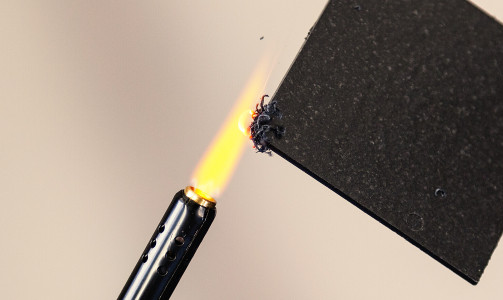
High Temperature Expandable Graphite from LUH is able to be used in thermoplastics without expanding during the extrusion process.
 Continue Reading...

 By Dr Koen Nickmans

Expandable graphite (EG) is a widely used mineral-based flame retardant due to its unique ability to form a voluminous intumescent char layer during fire exposure. When heated beyond a defined starting temperature, the graphite layers expand dramatically, up to 300 times their original volume. The resulting char forms an insulative and gas-impermeable barrier that prevents flame spread, reduces smoke release, and suppresses toxic gas formation. Unlike many traditional flame retardants, EG achieves this without relying on halogenated chemistries, making it a sustainable and REACH-compliant solution.

Figure 1: Expandable Graphite acts as a flame retardant by expanding and creating an insulative and gas-impermeable barrier.
For decades, the use of EG was largely confined to relatively low temperature applications such as polyurethane foams, bitumen membranes, firestop products, and coatings. Its introduction into thermoplastics, particularly high-performance engineering polymers, faced a critical processing barrier: the expansion mechanism is triggered too early. Conventional EG grades typically exhibit expansion onset in the range of 160–220 °C. This window overlaps directly with the melt processing conditions of widely used engineering plastics such as polyamide 6, polyamide 66, polycarbonate, and polybutylene terephthalate, which are commonly extruded or injection moulded between 220 and 300 °C. In practice, this meant that EG would start expanding during compounding, leading to foaming, poor dispersion, and a dramatic reduction in mechanical and flame-retardant performance.
The recent development of high-temperature expandable graphite (HT-EG) has shifted this paradigm. Nowadays HT-EG grades with starting temperatures of up to 290 °C are available, opening up new applications in engineering polymers (Table 1). Crucially, the HT-EG materials remain stable during extrusion and injection moulding, only activating once the polymer is exposed to fire.
|
EG Grade Type |
Starting Expansion Temperature |
Suitable Applications |
Polymer Compatibility |
|
Low-Temperature |
140–170 °C |
PU foams (low-pressure), coatings, sealants |
Not suitable for thermoplastics |
|
Standard |
180–220 °C |
PU foams (high-pressure), firestop products, bitumen membranes |
Limited use in commodity plastics (e.g., PE, PP blends) |
|
High-Temperature (HT-EG 230) |
≥ 230 °C |
Fire protection in plastics, technical coatings |
PA6, PBT, PC blends |
|
High-Temperature (HT-EG 270) |
≥ 270 °C |
Engineering thermoplastics requiring higher processing stability |
PA66, PBT, PC, engineering blends |
|
High-Temperature (HT-EG 290) |
≥ 290°C |
High-temperature resistant compounds, demanding applications |
PPS, high-temperature nylons, specialty thermoplastics |
Table 1: Comparative performance and applications of expandable graphite grades
The performance of EG in thermoplastics is influenced not only by starting temperature but also by expansion volume and expansion pressure. Importantly, both properties are sufficiently maintained in HT-EG to result in an efficient flame retardant system when triggered at elevated temperatures.
A recent academic article (Tomiak et. al, 2021), co-authored by our EG supplier LUH GmbH, demonstrated the efficiency of HT-EG through a series of compounding trials in PA6. The study demonstrated a significant flame retardant effect starting from 15 wt% addition of HT-EG. The coveted UL-94 V-0 rating was achieved at 25 wt% addition of HT-EG. Under the V-0 classification, a material, when tested vertically, self-extinguishes within 10 seconds after a flame is applied and does not produce flaming drips that ignite a cotton indicator below.
Flame retardant addition levels could be further by combining HT-EG with small amounts of AlPi (Aluminum Diethylphosphinate) and MPP (Melamine Polyphosphate). In this example, the UL-94 V-0 rating could be maintained at 20 wt% total additive loading. Such synergistic use of flame retardants can further help to balance mechanical properties and cost.
Formulators could also consider to further reinforce the voluminous char layer using a host of ceramifiable fillers such as aluminosilicates, wollastonite, or feldspar. This approach is exemplified in load bearing applications and for the prevention of thermal runaway events.

Figure 2: Left: Optical microscope image of PA6 containing HT-EG flakes. Right: Loss On Ignition (LOI) and UL-94 rating of HT-ET (black) and synergistic combination (blue), in function of total FR-additive addition level. Adapted from Tomiak et. al, 2021.
Beyond flame retardancy, EG contributes additional functional properties. Its graphitic structure enhances electrical and thermal conductivity, which is valuable in engineering plastics used in battery housings, electronic enclosures, or automotive under-the-hood parts. It also provides lubricity during processing and in service, while reinforcing stiffness in some formulations. These multifunctional effects position EG as more than just a fire safety additive.
By their very nature, the performance demanded from engineering polymers is greater than their cheaper polymeric alternatives (e.g. polyolefins). Performance in this context relates to both mechanical properties under normal operating conditions as well as during combustion. The integration of expandable graphite into engineering polymers therefore reflects a broader trend in flame retardant technology: a shift from purely chemical fire suppression toward materials that retain their physical and structural integrity during fire.

Figure 3: LUH expandable graphite has a high temperature of expansion onset allowing its use in thermoplastics that require high temperature extrusion.
Expandable graphite is therefore not only a flame retardant but a versatile engineering additive. With the availability of high-temperature grades offering controlled expansion onset above 230 °C, thermoplastics can now achieve higher safety standards without compromising processability or sustainability. This development enables new applications in automotive, electrical, and industrial components, where fire safety must coexist with demanding mechanical and thermal performance.
Contact us to find our how expandable graphite can benefit your project or discuss your application in more detail with our technical team.
Tomiak, F., Rathberger, K., Schöffel, A., & Drummer, D. (2021). Expandable Graphite for Flame Retardant PA6 Applications. Polymers, 13(16), 2733. https://doi.org/10.3390/polym13162733

Koen studied chemistry at the Catholic University of Leuven in Belgium which he followed up with a PhD in the field of responsive polymeric coatings from the Eindhoven University of Technology in the Netherlands. He has been with Lawrence Industries since 2019 and is now using his expertise as a Business Development Manager responsible for all our Polymer industries.
 View All Articles By Dr Koen Nickmans

 8 Minute Read
 5 Minute Read
 6 Minute Read
VIEW ALL ARTICLES
6 Minute Read
VIEW ALL ARTICLES
High Temperature Expandable Graphite from LUH is able to be used in thermoplastics without expanding during the extrusion process.
Continue Reading...
 5 Minute Read
Micaceous Iron Oxide (MIO) is a naturally occurring iron oxide used in protective coatings due to a lamellar/platy morphology that allows it to form a barrier towards the ingress of water.
Continue Reading...
 5 Minute Read
Thermochromic pigments, such as Chromazone®, enable formulators to create products with dynamic and heat-sensitive, colour changes. These smart materials have found their way into various applications, from functional safety indicators to eye-catching promotional products. For example, reversible thermochromic pigments are used in novelty mugs that reveal hidden designs when filled with hot beverages, packaging that signals when food or drink is at the optimal temperature for consumption, security labels for brand protection and anti-counterfeiting, and temperature-sensitive warning indicators on surfaces or medical devices.
Continue Reading...